Introduction
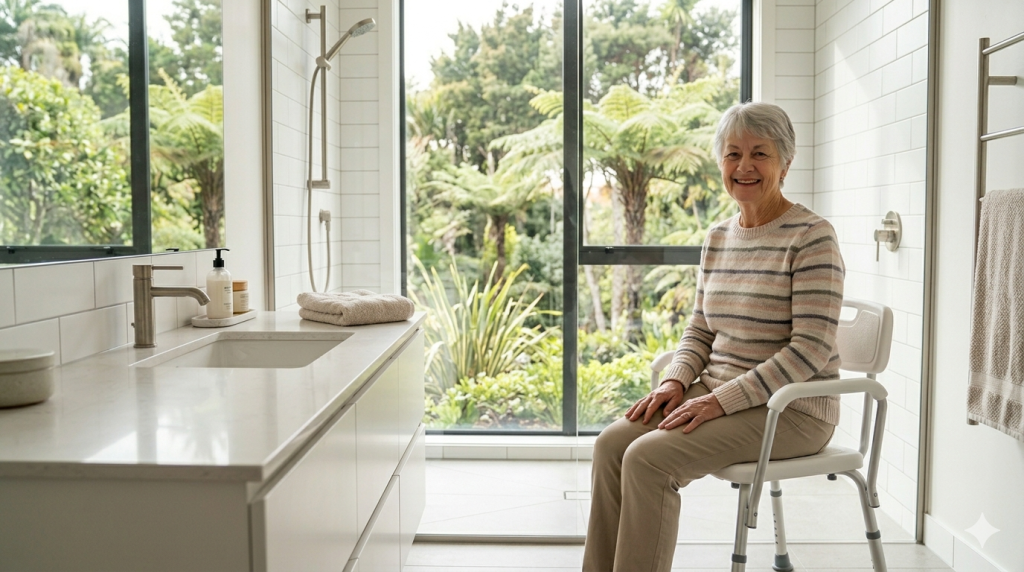
Bathroom safety for seniors in NZ is important because wet floors, limited space, low toilet seats, poor lighting, and difficult shower transfers can make everyday routines less comfortable and more hazardous.
A safer bathroom does not always require a complete renovation. Practical changes such as adding an anti-slip mat, installing well-positioned grab bars, using a supportive shower chair, improving lighting, and keeping frequently used items within reach can make a meaningful difference.
This 12-point bathroom safety checklist helps New Zealand seniors, caregivers, and family members review the whole bathroom rather than relying on a single safety product.
Safety Note
Bathroom equipment should match the senior’s balance, strength, mobility, bathroom layout, and ability to use the product correctly.
Professional advice may be needed if the senior has frequent falls, difficulty transferring, sudden mobility changes, significant weakness, cognitive changes, or uncertainty about which equipment is safe.
Disclosure
This article may contain affiliate links in the future. If you buy through these links, Golden Vibe may earn a small commission at no extra cost to you. We only recommend products that are relevant to senior safety, comfort, mobility, and everyday living.
Bathroom Safety for Seniors: Quick Checklist
| Bathroom Area | What to Check | Practical Improvement |
|---|---|---|
| Shower or bath floor | Is it slippery when wet? | Add a properly fitted anti-slip mat |
| Showering | Is standing tiring or unsteady? | Consider a shower chair or stool |
| Shower entry | Is there anything secure to hold? | Install appropriate grab bars |
| Toilet | Is the seat too low? | Consider a raised toilet seat or support frame |
| Shower controls | Are they difficult to reach? | Use a handheld shower head and accessible controls |
| Nighttime access | Is the route dark? | Add automatic night lights |
| Bathroom floor | Does water collect outside the shower? | Improve drying, drainage and mat placement |
| Pathways | Are there loose rugs or clutter? | Clear the walking route |
| Toiletries | Must the senior stretch or bend? | Keep everyday items within easy reach |
| Water temperature | Is the water unexpectedly hot? | Check temperature controls and settings |
| Equipment condition | Are rubber feet or suction cups worn? | Inspect and replace worn parts |
| Overall mobility | Are transfers still unsafe? | Seek professional assessment |
1. Improve Grip Inside the Shower or Bath
The shower or bath floor is one of the first areas to check.
Soap, shampoo, water, and smooth surfaces can make footing less secure. A properly fitted anti-slip mat can provide a more stable standing surface when it suits the shower or bath floor.
Suction mats generally work best on compatible smooth surfaces. They may not attach properly to heavily textured floors. If you are comparing mat materials, our PVC vs TPE shower mats guide explains the practical differences and why material alone does not determine grip.
The mat should:
- Sit flat
- Fit the main standing area
- Allow water to drain
- Have secure suction cups or backing
- Be easy to lift and clean
- Be replaced if it curls, cracks, or loses grip
A loose decorative rug should not be treated as a substitute for a bathroom safety mat.
2. Consider a Shower Chair or Shower Stool
Standing throughout a shower can be tiring for seniors with reduced strength, joint discomfort, poor balance, or limited endurance.
A shower chair allows the person to sit while washing. Depending on the user’s needs, suitable options may include:
- A basic shower stool
- A stool with arm supports
- A shower chair with a backrest
- A shower chair with arms and a backrest
- A compact folding shower seat
- A specialist transfer-style shower chair
A basic stool may be enough when fatigue is the main issue. A full chair with arms and a backrest generally provides more support.
The chair should fit the actual shower, remain stable when wet, have non-slip feet, and be adjusted to a safe seat height. Before buying, use our shower chair size guide to check seat height, width, leg spacing, shower dimensions and transfer clearance.
If the bathroom has a shower over a bath rather than a separate shower, a bath board may be more suitable. Our bath board for seniors guide explains bath measurements, rim requirements and transfer checks.
3. Install Grab Bars in Useful Positions
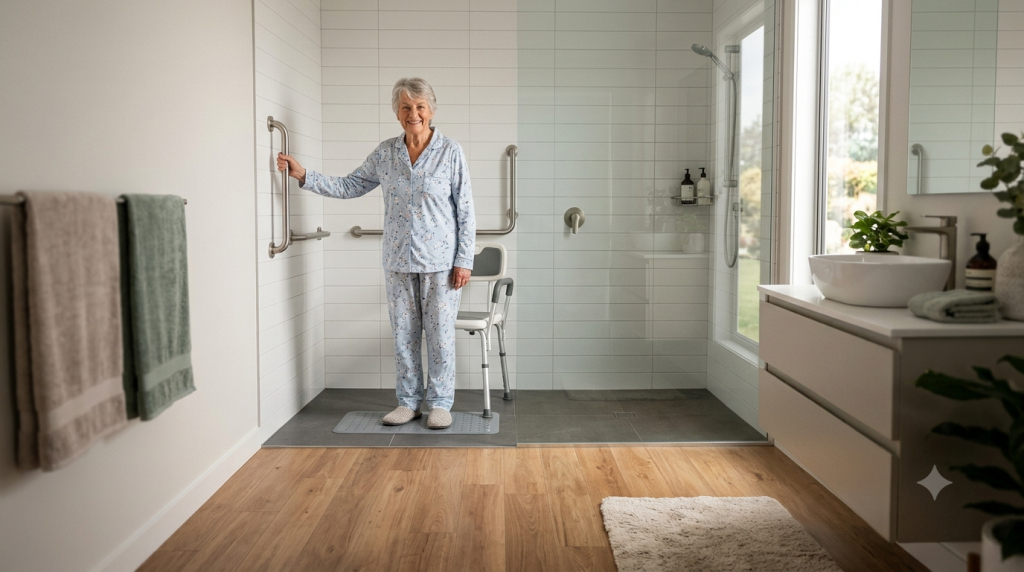
Grab bars can provide hand support when entering the shower, stepping out, sitting down, standing up, or moving near the toilet.
Placement matters as much as the product itself. A grab bar installed in the wrong position may be difficult or uncomfortable to use. For more detailed shower, toilet and transfer positioning, use our grab bar placement for seniors guide before deciding where a fixed rail should go.
Common locations include:
- Near the shower entrance
- Inside the shower
- Beside the bath
- Beside the toilet
- Near a change in floor level
- Close to a shower chair
Grab bars should be properly fixed to a suitable wall structure. Towel rails, shower doors, shelves, and vanity units should not be used as support unless they were specifically designed and installed for that purpose.
4. Review Toilet Height and Support
A low toilet can make sitting down and standing up difficult for seniors with reduced leg strength, knee discomfort, hip problems, or poor balance.
Possible improvements include:
- A raised toilet seat
- A toilet safety frame
- Grab bars beside the toilet
- A higher toilet
- A raised toilet seat with arm supports
If bilateral arm support is the main problem, our toilet frames for seniors in NZ guide compares freestanding surrounds and raised over-toilet frames.
The correct height should allow the senior to sit comfortably and place their feet securely.
A raised seat that is too high can also feel unstable, so height and fit should be checked carefully. If reaching the bathroom itself is difficult, a bedside or mobile commode may be more appropriate. Compare our commode chairs for seniors in NZ guide.
To choose between common 50mm, 100mm and 150mm options, see our raised toilet seat height guide for seniors in NZ.
5. Make Shower Controls and Toiletries Easy to Reach
Reaching, bending, twisting, and stretching can reduce stability in a wet environment.
Frequently used items should be reachable from the senior’s normal standing or seated shower position.
Useful changes may include:
- A handheld shower head
- A wall-mounted shower holder at a practical height
- Soap and shampoo within easy reach
- A shower caddy that does not obstruct movement
- Lever-style controls
- Clearly marked hot and cold settings
- Towels positioned close to the shower exit
- Healthify New Zealand also provides practical guidance on non-slip mats, bathroom handrails, bath seats and handheld shower heads for people concerned about falls.
For product types, hose length, rail height and seated-showering considerations, see our handheld shower heads for seniors in NZ guide.
The senior should not need to reach down to the floor for shampoo or turn sharply to reach a towel.
6. Improve Bathroom and Hallway Lighting
Poor lighting can make it harder to see water, floor edges, obstacles, toilet position, and changes in surface level.
Bathroom safety should include the route from the bedroom to the bathroom, especially for nighttime toilet visits.
Useful lighting options include:
- Motion-sensor night lights
- Plug-in hallway lights
- Bedside lighting
- A clearly accessible bathroom switch
- Bright, even overhead lighting
- Lighting near the toilet and shower entrance
Lighting should reduce dark areas without producing uncomfortable glare.
7. Keep the Bathroom Floor Dry
An anti-slip mat inside the shower does not solve water on the surrounding floor.
Check whether water regularly collects:
- Outside the shower door
- Beside the bath
- Near the vanity
- Around the toilet
- Under a leaking tap
- Near wet towels
Possible improvements include:
- Repairing leaks
- Checking shower seals
- Improving drainage
- Using an absorbent mat that stays flat
- Drying the floor after showering
- Keeping towels within easy reach
Floor mats outside the shower should have secure backing and low edges. Thick, loose, or curling mats may become trip hazards. If slippery tiles or flooring remain a problem even when the floor is dry, see our guide to non-slip bathroom flooring for seniors in NZ.
8. Remove Clutter and Loose Rugs
Bathrooms are often small, so even minor obstacles can interfere with safe movement.
Remove or reposition:
- Loose rugs
- Laundry baskets in the walking path
- Cleaning products on the floor
- Electrical cords
- Small stools not designed for wet areas
- Decorative items near the toilet or shower
- Doors that block walking aids
The senior should have a clear path between the bathroom entrance, toilet, shower, and vanity.
If a walking frame is used, check that there is enough space to enter, turn, and position it safely.
9. Keep Everyday Items at a Practical Height
Items stored too high or too low may require stretching or bending.
Consider the location of:
- Towels
- Toilet paper
- Soap
- Shampoo
- Toothbrushes
- Medication
- Clean clothing
- Continence products
- Hair-care items
Frequently used items should be stored between approximately waist and shoulder height where practical.
Avoid placing essential products in deep floor-level cupboards or on high shelves that require a stool.
10. Check Water Temperature and Controls
Older adults may take longer to respond to unexpectedly hot water. Some people may also have reduced sensation or slower movement.
Check whether:
- The hot and cold controls are clearly identified
- The mixer is easy to operate
- The temperature changes suddenly
- The senior can reach the controls from a shower chair
- Another household appliance affects shower temperature
- A plumber should inspect or adjust the system
The senior should be able to turn the water on, adjust it, and turn it off without standing in an unstable position.
11. Inspect Safety Equipment Regularly
Bathroom safety equipment can become less effective over time.
Check:
- Suction cups
- Rubber feet
- Chair legs
- Grab-bar fixings
- Raised toilet-seat clamps
- Drainage holes
- Folding mechanisms
- Plastic cracks
- Rust or corrosion
- Loose screws
- Mat edges
Soap residue can also reduce the grip of suction cups and rubber surfaces.
Equipment should be cleaned, dried, and inspected according to the manufacturer’s instructions. Stop using a product if it moves, rocks, cracks, or no longer feels secure.
12. Review the Senior’s Changing Needs
A bathroom setup that worked six months ago may no longer be suitable if mobility, strength, vision, balance, medication, or health has changed.
Warning signs include:
- New difficulty entering the shower
- Holding furniture or walls for support
- Near-falls
- Avoiding showers
- Increased tiredness
- Trouble standing from the toilet
- Difficulty operating taps
- Needing more help from a caregiver
- Confusion during nighttime bathroom visits
- A recent illness, injury, or hospital stay
These changes may indicate that equipment, bathroom layout, or professional support should be reviewed.
Shower Chair, Grab Bars or Anti-Slip Mat: Which Comes First?
The answer depends on the senior’s main difficulty.
Choose an anti-slip mat first when the main concern is slippery footing on a compatible shower or bath surface.
Consider a shower chair when standing is tiring, painful, or unsteady.
Consider grab bars when the senior needs hand support during shower entry, toilet transfers, sitting, or standing.
Many seniors benefit from a combination rather than one product alone.
For example, a shower chair may reduce standing time, grab bars may help with sitting and standing, and an anti-slip mat may improve footing.
Bathroom Safety in Small Bathrooms
Small bathrooms need careful planning because large equipment can reduce movement space.
Before buying, measure:
- Shower width and depth
- Doorway width
- Space around the toilet
- Distance between the toilet and vanity
- Available turning space
- Position of shower doors
- Space needed for a caregiver
- Space needed for a walking frame
Compact products may include:
- Narrow shower stools
- Folding shower seats
- Short support rails
- Raised toilet seats without wide frames
- Wall-mounted storage
- Small motion-sensor lights
Do not assume the smallest product is automatically safest. It still needs to provide enough stability and support.
Bathroom Safety in Rental Homes
Renters may have limits on drilling, permanent rails, plumbing changes, or structural modifications.
Possible non-permanent options may include:
- Freestanding shower chairs
- Properly fitted anti-slip mats
- Raised toilet seats
- Toilet safety frames
- Plug-in night lights
- Handheld shower attachments where compatible
- Better storage and floor organisation
However, temporary suction handles should not automatically be treated as equivalent to professionally installed grab bars.
Discuss permanent changes with the landlord or property manager before installation.
Bathroom Safety for Seniors Who Use Walking Aids
Walking sticks and walking frames can help a senior reach the bathroom, but the bathroom must have enough space to manage the aid.
Check whether:
- The doorway is wide enough
- The frame can be placed without blocking the toilet
- The floor remains dry
- There is a secure place for the walking aid
- The senior can transfer without reaching too far
- The aid is available when leaving the shower
- A caregiver can assist if required
A walking frame should not be left where it becomes another obstacle.
Common Bathroom Safety Mistakes
Buying Equipment Without Measuring
A shower chair, toilet frame, or walking aid may not fit the bathroom.
Measure first.
Relying on One Product
A grab bar cannot fix a wet floor, and an anti-slip mat cannot help someone who is too tired to stand.
Review the whole routine.
Using Towel Rails as Grab Bars
Towel rails may pull away from the wall when body weight is applied.
Use properly installed support products.
Keeping Loose Mats for Comfort
A loose floor mat can slide or curl.
Use an appropriate low-profile mat with secure backing.
Waiting Until After a Fall
Near-falls, increasing difficulty, or avoiding the bathroom are already reasons to review safety.
Ignoring Nighttime Movement
A safe shower does not solve a dark path from the bedroom to the toilet.
Include hallway and bedroom lighting.
When to Seek Professional Advice
Professional advice may be useful if the senior:
- Has frequent falls or near-falls
- Cannot enter or leave the shower safely
- Needs physical assistance with transfers
- Has sudden weakness or balance changes
- Uses a wheelchair or walking frame
- Is recovering from surgery or injury
- Has dementia, confusion, or nighttime wandering
- Needs permanent bathroom modifications
- Is unsure where grab bars should be installed
- May qualify for funded equipment or home support
- For official New Zealand falls-prevention information and strength-and-balance support, visit ACC New Zealand.
An occupational therapist, physiotherapist, doctor, nurse, mobility equipment specialist, builder, plumber, or qualified installer may be involved depending on the problem.
For a broader overview of mobility and home-support products, read our guide to mobility aids for seniors in NZ.
FAQ
What is the most important bathroom safety product for seniors?
There is no single best product for everyone. The first priority depends on whether the main problem is slippery footing, standing fatigue, lack of hand support, toilet height, lighting, or transfers.
Are shower chairs safe for elderly people?
A shower chair can be helpful when it is stable, correctly sized, suitable for the shower, and used on a safe floor. Seniors needing more support may benefit from a chair with arms and a backrest.
Where should grab bars be installed?
Common locations include the shower entrance, inside the shower, beside the bath, and near the toilet. Placement should match the senior’s movement pattern and the wall structure.
Are anti-slip bathroom mats enough to prevent falls?
An anti-slip mat may improve footing, but it does not address every risk. Lighting, transfers, clutter, strength, balance, grab bars, and suitable seating may also matter.
Is a raised toilet seat helpful for seniors?
A raised toilet seat may help seniors who find low toilets difficult. It must fit securely and should not be so high that the user’s feet lose stable contact with the floor.
How often should bathroom safety be reviewed?
Review the bathroom whenever the senior’s mobility, health, vision, balance, medication, equipment, or level of assistance changes. Equipment should also be inspected regularly for wear or movement.
Final Recommendation
Bathroom safety for seniors should be approached as a complete system rather than a single purchase.
Start by checking slippery surfaces, showering ability, toilet height, hand support, lighting, clutter, and the route to the bathroom. Then choose products that solve the senior’s actual difficulties.
For many households, a practical starting combination is a properly fitted anti-slip mat, a stable shower chair when standing is difficult, correctly positioned grab bars, clear nighttime lighting, and a clutter-free floor.
The best bathroom setup is the one that fits the senior’s mobility, bathroom layout, daily routine, and changing support needs.
For a broader whole-home view beyond the bathroom, read our guide to fall prevention products for seniors in NZ.