Introduction
Non slip bathroom flooring can make everyday showering and toileting feel more secure for seniors, but there is no single solution that works for every bathroom.
Some homes only need a properly fitted shower mat. Others have smooth tiles that remain slippery whenever they become wet. In these bathrooms, adhesive grip pads, professional tile treatments or a different floor finish may be more practical.
The right approach depends on where the slippery surface is located, what material the floor is made from, whether the home is owned or rented, how much renovation is practical and whether the senior uses a walking aid.
This guide compares the main non-slip bathroom flooring options for New Zealand seniors and explains when a simple mat is enough and when the floor itself may need attention.
Safety Note
No floor can be made completely slip-proof.
Water, soap, shampoo, cleaning products and poor drainage can reduce grip even on a textured surface.
A safer bathroom should also consider:
- Grab bars
- Shower seating where needed
- Good lighting
- Clear walking paths
- Correct drainage
- Stable footwear
- Appropriate walking support
- The senior’s balance and mobility
Frequent falls, near-falls or major changes in mobility should be discussed with an appropriate healthcare professional rather than relying only on flooring products.
Disclosure
This article may contain affiliate links in the future. If you buy through these links, Golden Vibe may earn a commission at no additional cost to you.
Golden Vibe has not physically tested every flooring treatment or anti-slip product discussed below.
Always confirm product suitability, installation requirements and current specifications with the manufacturer, supplier or installer.
Quick Comparison
| Option | Best For | Installation | Main Advantage | Main Limitation |
|---|---|---|---|---|
| Suction shower mat | Smooth bath or shower base | Simple DIY | Low cost and removable | May not grip textured surfaces |
| Low-profile floor mat | Outside shower or bath | Simple DIY | Helps manage wet feet | Can become a trip hazard if loose |
| Adhesive anti-slip pads | Bath, shower or selected floor areas | DIY or professional | Stays in position | Surface preparation matters |
| Tile anti-slip treatment | Existing slippery tiled floor | Usually professional | Treats the floor itself | More expensive than a mat |
| Vinyl anti-slip treatment | Existing vinyl floor | Specialist installation | Can improve larger floor areas | Not suitable for every floor |
| New slip-resistant flooring | Renovations or long-term access | Professional installation | Whole-floor solution | Highest cost and disruption |
Start With the Location of the Slip Risk
Before buying anything, identify where the problem actually occurs.
The risk may be:
- Inside the shower
- Inside the bath
- Immediately outside the shower
- Across the whole bathroom
- Near the toilet
- At the bathroom entrance
- At a change in floor level
These situations do not all need the same solution.
A senior who only feels unsafe standing inside a smooth shower may need a good shower mat.
A bathroom with polished tiles that become slippery throughout the room may need treatment of the actual floor.
Option 1: Non-Slip Shower or Bath Mats
A properly fitted anti-slip mat is usually the simplest option when the main problem is the wet surface inside a bath or shower.
Common designs include:
- Suction-cup mats
- TPE mats
- PVC mats
- Quick-dry shower mats
- Textured rubber mats
Suction mats normally work best on smooth compatible surfaces.
They may not grip properly on:
- Textured tiles
- Uneven surfaces
- Heavily patterned shower bases
- Grout lines
- Damaged floors
The mat should sit flat and cover the main standing area without blocking drainage.
Good For
- Smooth shower floors
- Bath bases
- Small isolated slip risks
- Rental homes
- Budget-conscious households
- Situations where permanent changes are unnecessary
Be Careful If
- The mat slides when wet
- Suction cups do not attach
- Edges curl
- Soap residue reduces grip
- Water remains underneath
- The senior regularly catches their foot on the edge
For specific products currently available in New Zealand, read our non-slip shower mats for seniors in NZ guide.
Option 2: Anti-Slip Pads for Baths and Showers
Self-adhesive anti-slip pads are another option when a loose mat is inconvenient or does not stay in position.
These products attach directly to the bath, shower base or floor.
They may be supplied as:
- Individual pads
- Strips
- Textured shapes
- Custom layouts
One New Zealand example is AquaGrip, which is marketed for baths, showers and bathroom floors and can be installed professionally or as a DIY application.
Unlike a removable mat, properly installed adhesive pads remain fixed in position.
This can be useful when a senior dislikes the movement, cleaning or raised edges of a traditional shower mat.
Good For
- Showers where a mat moves
- Bath bases
- Selected high-risk standing areas
- Households wanting a low-profile solution
- Bathrooms where permanent adhesive products are acceptable
Be Careful If
- The surface is not prepared correctly
- Adhesion fails
- Pads become worn
- Cleaning products damage the surface
- The placement does not cover the actual standing area
- The home is rented and adhesive changes require permission
Pads should still be inspected regularly for lifting, wear and reduced grip.
Option 3: Anti-Slip Treatment for Existing Tiles
When the entire tiled bathroom floor becomes slippery when wet, covering isolated areas with mats may not solve the main problem.
A specialist anti-slip tile treatment can modify the grip characteristics of the existing surface without replacing the entire floor.
This may be useful for:
- Ceramic tiles
- Porcelain tiles
- Bathroom floors
- Shower areas
- Other compatible tiled surfaces
One New Zealand example is AS-B Anti-Slip treatment.
This type of solution may appeal to households that want to retain existing tiles while improving wet-surface traction.
Good For
- Existing tiled bathrooms
- Large slippery floor areas
- Bathrooms where multiple mats would be impractical
- Homeowners who want to keep the existing floor
- Long-term use
Be Careful If
- The tile material is not compatible
- The floor is damaged
- Cleaning residue affects treatment
- Drainage is still poor
- The surface needs professional preparation
- The household assumes treatment removes every fall risk
Ask the installer how the treatment performs when wet, how it should be cleaned and whether repeat treatment or maintenance is required.
Option 4: Anti-Slip Solutions for Vinyl Floors
Some bathrooms use vinyl rather than tile.
Vinyl can be practical in wet areas, but the amount of grip varies significantly between products and surface finishes.
If an existing vinyl floor is slippery, specialist anti-slip systems may be available without replacing the entire floor.
Anti-Slip Solutions NZ, for example, lists VinylGrip as an option for improving traction on vinyl flooring.
Before applying any treatment, confirm:
- Floor compatibility
- Cleaning requirements
- Whether the surface is damaged
- Whether moisture is trapped underneath
- Whether the treatment creates raised edges
- Whether the senior uses a walking frame or wheelchair
The solution should remain stable under both feet and mobility equipment.
Option 5: Replace the Flooring During a Renovation
If the bathroom is already being renovated, it may be more sensible to choose a safer floor material from the beginning rather than adding mats or treatments later.
Important factors include:
- Wet-surface grip
- Drainage
- Water resistance
- Ease of cleaning
- Floor transitions
- Threshold height
- Comfort underfoot
- Compatibility with walking frames
- Wheelchair access where relevant
For renovation planning, New Zealand Building Performance also provides technical guidance on slip-resistant walking surfaces and wet-to-dry transition areas.
Do not choose bathroom flooring only because it looks attractive in the showroom.
Polished or highly smooth finishes may feel very different when water, soap and bare feet are involved.
Ask the flooring supplier or installer:
- How does this product perform when wet?
- Has its slip resistance been tested?
- Is it suitable for bathroom use?
- Is it suitable for barefoot wet areas?
- How should it be cleaned?
- Does cleaning change surface grip?
- Is there a more textured version?
- Will grout or joins create problems for mobility aids?
Shower Floor vs Bathroom Floor
The shower floor and the surrounding bathroom floor have different requirements.
Inside the Shower
The main concerns are:
- Bare feet
- Water
- Soap and shampoo
- Drainage
- Standing balance
- Shower-chair feet
- Suction-mat compatibility
A strong wet-grip surface is important.
Outside the Shower
The main concerns are:
- Wet feet
- Water carried out of the shower
- Loose bath mats
- Walking aids
- Floor transitions
- Nighttime toileting
- Footwear
A thick soft rug may absorb water but still create a trip hazard.
Low-profile mats with secure backing are usually more practical than loose or curling rugs.
Mats vs Floor Treatments: Which Is Better?
Choose a mat when:
- The slippery area is small
- The floor itself is otherwise suitable
- The home is rented
- The budget is limited
- The solution needs to be removable
- The mat grips properly on the existing surface
Consider a floor treatment when:
- A large tiled area becomes slippery
- Mats do not stay in place
- The floor is used frequently
- Multiple mats would create obstacles
- A long-term solution is preferred
- The existing flooring does not need replacement
Consider new flooring when:
- The bathroom is already being renovated
- The existing surface is damaged
- Drainage needs redesign
- Accessibility changes are being made
- The entire bathroom layout needs improvement
Why Textured Floors Can Affect Suction Mats
A common mistake is buying a suction mat for a textured shower floor.
Suction cups need close contact with the underlying surface.
Texture, grout or raised patterns can prevent a strong seal.
The result may be a mat that appears secure when dry but moves when someone steps on it.
Before buying a suction mat:
- Check the floor texture.
- Test whether suction cups can attach securely.
- Apply weight gradually.
- Check movement when the surface is wet.
- Stop using the mat if it shifts.
When suction does not work, an adhesive pad, compatible floor treatment or different floor solution may be more appropriate.
Keep Water From Becoming the Main Problem
Even the best non slip bathroom flooring performs better when water is controlled.
Check:
- Shower seals
- Drain position
- Blocked drains
- Leaking taps
- Water escaping under the shower door
- Wet towels left on the floor
- Splash from handheld shower heads
- Water around the vanity
- Condensation
If water regularly pools in one place, fix the cause rather than continually adding more mats.
Bathroom Flooring for Seniors Using Walking Frames
A senior using a walking frame has different flooring requirements from someone walking independently.
Check whether:
- Wheels roll smoothly across the floor
- Rear glides or rubber tips catch
- Mats move when contacted
- Mat edges obstruct wheels
- Floor transitions are raised
- The frame can turn without sliding
- The bathroom is wide enough
- There is a dry place to position the frame during showering
Loose mats can be particularly problematic for walking frames because wheels or rear feet may catch the edge.
A continuous stable floor may be preferable when a mobility aid is used regularly.
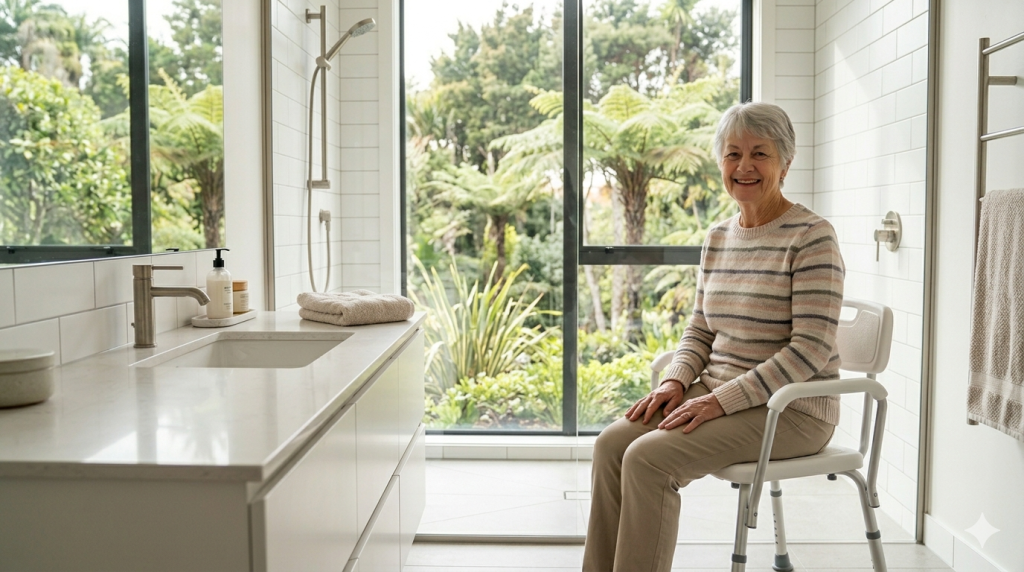
What About Shower Chairs?
A shower chair reduces standing time but still depends on the floor.
Check that:
- All chair feet contact the floor
- Rubber feet remain in good condition
- The chair does not rock
- The floor is level enough
- Water can drain
- The chair does not sit partly on a mat edge
Do not place a shower chair on top of a mat unless the mat and chair remain completely stable together. The chair must also fit the user and the shower. See our shower chair size guide for seat height, width, leg footprint and transfer-space checks.
For seniors who become tired or unsteady while standing, compare our shower chairs for seniors in NZ guide.
Grab Bars Still Matter
Floor grip and hand support solve different problems.
A floor may reduce slipping, while grab bars provide a secure handhold during:
- Shower entry
- Stepping out of the bath
- Sitting
- Standing
- Turning
- Toilet transfers
A senior who reaches for towel rails, taps or shower screens may need properly positioned grab bars even when the floor has good grip.
For more information, see our grab bars for seniors in NZ guide.
Rental Homes
Renters may prefer reversible options such as:
- Properly fitted shower mats
- Low-profile bath mats
- Freestanding shower chairs
- Other non-permanent safety products
Adhesive pads, coatings and flooring replacement may require approval from the landlord or property manager.
Do not assume that a temporary solution is safe simply because it does not modify the property.
A loose mat that slides is still a hazard.
Cleaning and Maintenance
Grip can change over time.
Soap film, shampoo, conditioner, oils and cleaning products can create a slippery layer on otherwise textured flooring.
Regularly check:
- Shower mats
- Suction cups
- Adhesive pads
- Tile surfaces
- Grout
- Vinyl
- Drainage
- Floor edges
Follow the manufacturer’s cleaning instructions.
Avoid using a cleaner that damages the anti-slip surface or leaves a residue.
Common Mistakes
Adding More Loose Mats
Several overlapping mats can create more edges to catch a foot or walking aid.
Solve the actual slippery area rather than covering the whole bathroom with loose rugs.
Choosing Flooring Only by Appearance
Glossy or polished surfaces may look attractive but wet performance matters more in a senior bathroom.
Ignoring Drainage
A textured floor does not fix standing water.
Assuming “Non-Slip” Means Slip-Proof
No product removes all risk.
Using a Shower Mat That Cannot Grip the Floor
Check compatibility with textured surfaces.
Forgetting Walking Aids
Wheel size, frame feet and floor transitions all matter.
Using Household Rugs Inside the Bathroom
A general rug may slide, curl or remain wet.
Waiting Until After a Fall
Repeated slipping, grabbing walls or avoiding the shower are already reasons to review the bathroom.
ACC New Zealand’s home safety checklist also recommends reviewing bathroom slip risks, bath mats, non-slip shower or bath surfaces and appropriate hand rails.
When to Seek Professional Advice
Consider professional advice when:
- The senior has fallen in the bathroom
- Near-falls are becoming frequent
- The entire tiled floor is slippery
- A wheelchair or walking frame is used
- Major renovation is planned
- Drainage is poor
- A walk-in shower is being installed
- Thresholds need to be removed
- The bathroom is too small for current equipment
- Grab-bar locations are uncertain
- The senior needs physical help during transfers
An occupational therapist, physiotherapist, bathroom-access specialist or appropriate building professional may help identify the main risks before money is spent on renovations.
Final Recommendation
For a small slippery area inside a smooth bath or shower, start with a properly fitted non-slip mat.
If a loose mat does not stay secure, low-profile adhesive anti-slip pads may be worth considering.
When the existing tiled floor is slippery across a larger area, a professional anti-slip tile treatment may provide a more practical long-term solution than adding multiple mats.
During a full bathroom renovation, choose flooring based on wet grip, drainage, accessibility and everyday use rather than appearance alone.
For specific bath and shower mat recommendations currently available in New Zealand, read our non-slip shower mats for seniors in NZ guide.
For a complete review of lighting, grab bars, toilet support, shower seating and floor hazards, use our bathroom safety checklist for seniors in NZ.
The safest bathroom floor is not simply the roughest surface. It is a surface that provides reliable grip, drains properly, remains easy to maintain and works with the senior’s actual mobility needs.
Frequently Asked Questions
What is the best non slip bathroom flooring for seniors?
There is no single best option.
A shower mat may be enough for a small smooth shower. Existing slippery tiles may be better suited to an anti-slip treatment, while a renovation provides the opportunity to select a slip-resistant wet-area floor from the beginning.
Are non-slip shower mats safe for elderly people?
They can be useful when the mat fits properly, stays flat and grips the underlying surface.
Suction mats may not work well on heavily textured floors.
What can I use instead of a shower mat?
Alternatives can include adhesive anti-slip pads, specialist tile treatments or a suitable slip-resistant shower floor.
Do anti-slip coatings work on bathroom tiles?
Specialist treatments are available for compatible tiled surfaces.
The exact result depends on the tile, preparation, application and maintenance, so suitability should be confirmed with the supplier or installer.
Are textured bathroom tiles safer?
Texture may improve traction, but wet-surface performance varies between products.
Ask for the relevant slip-resistance information rather than judging only by appearance or texture.
Is vinyl suitable for an elderly person’s bathroom?
Some vinyl products are designed for wet areas and may provide suitable grip, but performance differs between products.
Check wet-use suitability, surface grip and compatibility with mobility aids.
Should I put a bath mat outside the shower?
A low-profile absorbent mat with secure backing may help manage water outside the shower.
Avoid loose, thick or curling mats that create a trip edge.
Can a walking frame go over bathroom mats?
It may, but mat edges can catch wheels or rear feet.
For regular walking-frame use, a continuous stable floor is often easier to manage.
Can anti-slip pads be removed?
It depends on the product and adhesive system.
Confirm this before installation, particularly in rental properties.
How often should non-slip bathroom flooring be checked?
Inspect mats, pads, flooring, drainage and grip regularly and whenever the senior’s mobility changes.
Replace or repair anything that moves, curls, becomes damaged or loses traction.