Introduction
Mobility aids for seniors in NZ can help older adults move more safely, stay independent, and feel more confident at home and in the community. The right mobility aid is not simply the strongest, biggest, or most expensive product. It should match the senior’s balance, strength, confidence, home layout, daily routine, and level of support needed.
Some seniors only need a walking stick for light balance support. Others may need a walking frame, wheelchair, mobility scooter, bathroom grab bar, shower seat, raised toilet seat, or bedroom safety product. Many homes also benefit from small changes such as better lighting, non-slip footwear, and safer bathroom flooring.
This guide explains the main types of mobility aids for seniors in New Zealand, when each option may be useful, and how families can think about home safety more practically.
Quick Guide: Which Mobility Aid Makes Sense?
Best for Light Balance Support: Walking Sticks and Canes
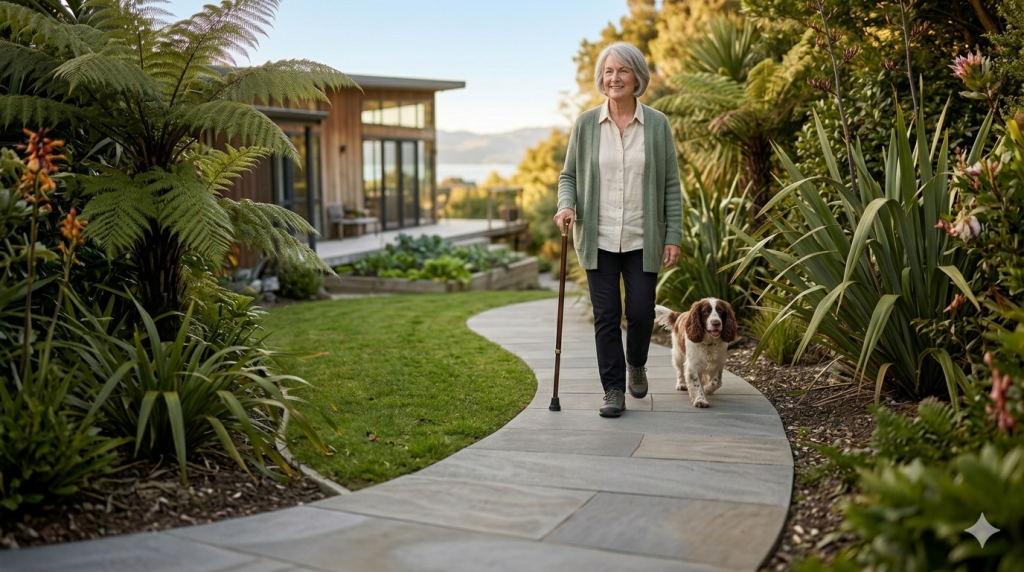
Walking sticks and canes are usually suitable for seniors who are mostly mobile but want extra confidence while walking.
They are light, portable, and easy to use. A walking stick may help when moving around the home, walking outside, visiting shops, or dealing with mild balance concerns.
However, a walking stick does not provide as much support as a walking frame. If a senior feels very unsteady, becomes tired quickly, or needs support on both sides, a walking frame may be more appropriate.
If you are comparing light balance support with stronger stability, our walking stick vs walking frame guide may help.
Best for More Stability: Walking Frames
Walking frames provide more support than walking sticks. They are often useful for seniors who need stronger balance assistance, especially indoors.
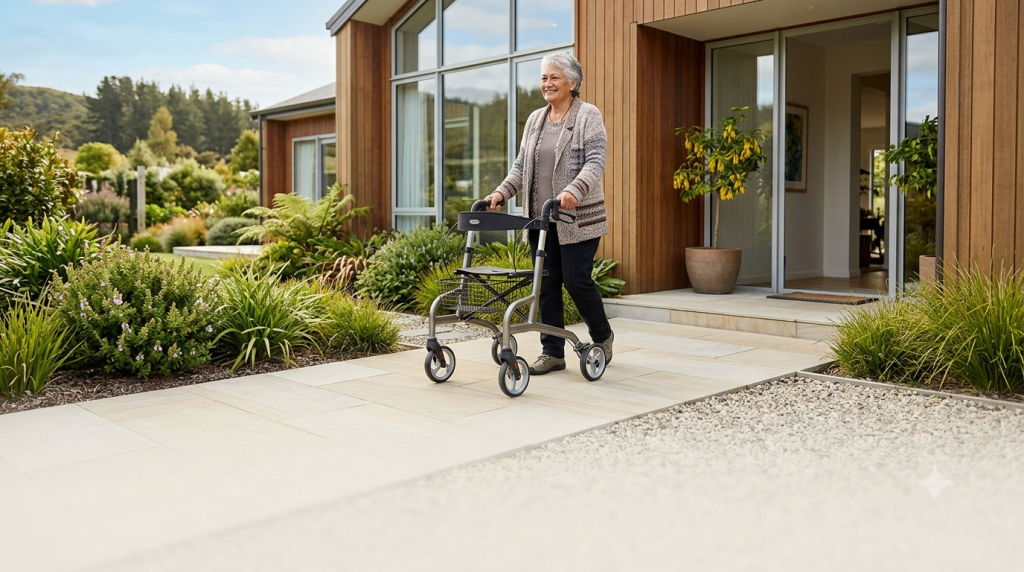
There are different types, including standard walking frames, two-wheel frames, and four-wheel rollators. Some rollators include seats, baskets, and hand brakes.
Walking frames can be helpful for seniors who want to move around more safely but still prefer to walk rather than use seated mobility.
For seniors who walk on gravel, grass or uneven outdoor paths, our guide to off road walking frames for seniors in NZ may also be useful.
Seniors unsure whether they need a built-in seat can read our walking frame with seat vs standard frame guide. If you are choosing a walking frame for a parent, our walking frame for elderly parent guide explains the nine practical checks to make before buying.
Best for Longer Outdoor Trips: Mobility Scooters
Mobility scooters may suit seniors who can walk short distances but become tired during longer outdoor trips.
They can help with local errands, shopping centres, appointments, retirement villages, and neighbourhood travel. However, they require safe control, storage space, charging, and awareness of local footpaths and public spaces.
A mobility scooter is a larger decision than a walking stick or frame. It should match the user’s confidence, judgement, local environment, and ability to operate it safely.
Best for Appointments and Outings: Wheelchairs
Wheelchairs may be useful when walking longer distances becomes difficult, tiring, or unsafe.
A transit wheelchair can be pushed by a family member or caregiver. A self-propelled wheelchair allows the user to move themselves if they have enough upper body strength. Lightweight folding wheelchairs are often useful for car transport and appointments.
The right wheelchair depends on whether it will be used occasionally, regularly, indoors, outdoors, independently, or with assistance.
Best for Bathroom Safety: Shower Seats, Grab Bars and Raised Toilet Seats
Bathrooms are one of the most important areas to improve for senior safety.
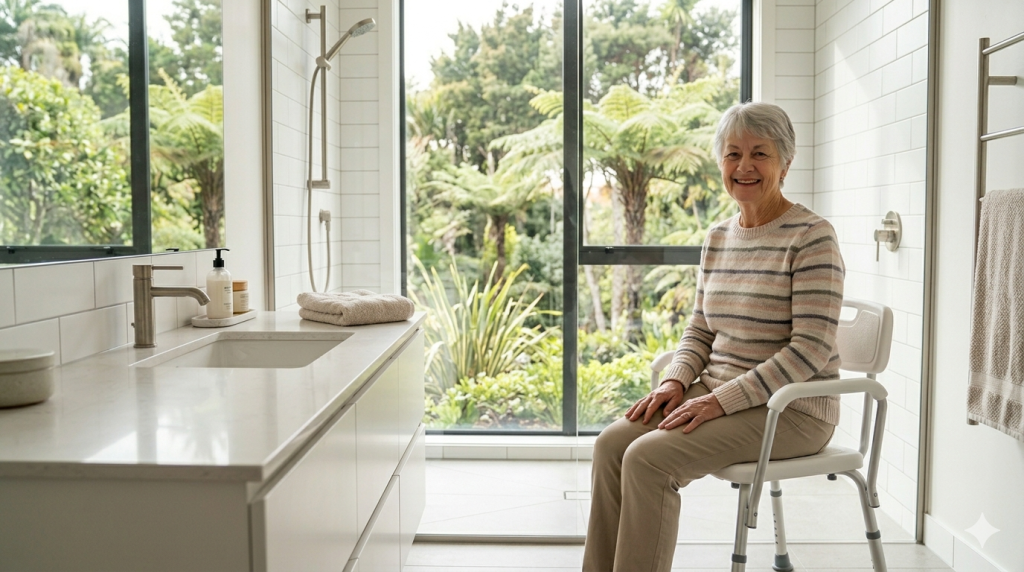
Shower seats can make bathing safer and less tiring. Grab bars provide hand support near showers, baths, and toilets. Raised toilet seats can make sitting and standing easier.
These products often work best together. A shower seat alone may help, but a bathroom with grab bars, non-slip surfaces, good lighting, and safe flooring is usually more practical.
Best for Bedroom Support: Bed Rails and Adjustable Beds
Some seniors need extra support when getting in and out of bed.
Bed rails can provide a stable handhold. Adjustable beds can make sitting up, resting, and changing position easier. Overbed tables can also help seniors keep meals, books, tablets, water, or medication within reach.
Bedroom safety is especially important for seniors who get up during the night.
For a detailed comparison of bedroom support rails and safety handles, read our guide to bed rails for seniors in NZ.
Best for Everyday Independence: Dressing and Daily Living Aids
Not every mobility aid is about walking.
Sock aids, long-handled shoe horns, easy-grip cutlery, jar openers, and overbed tables can make daily routines easier. These smaller aids can reduce bending, gripping effort, and frustration.
For seniors who want to stay independent, small daily living aids can be just as valuable as larger mobility products. For practical examples, compare our daily living aids for seniors in NZ guide, including reachers, sock aids, shoe horns, grooming tools and kitchen helpers.
Mobility Aids vs Home Safety Products
Mobility aids help a person move, stand, walk, sit, or transfer more safely.
Home safety products improve the environment around the person.
Both matter.
For example, a walking frame may help a senior move through the hallway. But if the hallway is dark, cluttered, or has loose rugs, the risk is still higher. A night light, clear pathway, non-slip slippers, and stable furniture can all support safer movement.
The best approach is not to buy one product and assume the home is safe. It is better to match the right mobility aid with a safer home setup. If door thresholds or entrance steps prevent safe access, our wheelchair ramps NZ guide compares portable and home-access options.
Common Types of Mobility Aids for Seniors
Walking Sticks and Canes
Walking sticks are suitable for seniors who need light support. They are easy to carry and can be used indoors or outdoors.
Look for:
- Correct height
- Comfortable handle
- Non-slip rubber tip
- Lightweight design
- Stable feel
- Folding option if needed
Walking sticks are not ideal for seniors who need strong weight-bearing support or feel very unsteady.
If appearance also matters, our premium walking canes guide compares formal wooden, metallic and patterned walking sticks available in New Zealand.
Walking Frames and Rollators
Walking frames provide more stability than canes. They may be standard, two-wheel, or four-wheel designs.
Look for:
- Correct height adjustment
- Strong frame
- Comfortable handles
- Suitable width for doorways
- Wheels if easier movement is needed
- Brakes if using a rollator
- Seat if resting is important
A rollator can be useful outdoors, but the senior must be able to use the brakes safely.
Wheelchairs
Wheelchairs provide seated mobility for seniors who cannot comfortably walk longer distances.
Look for:
- Correct seat width
- Suitable chair weight
- Folding design if transport is needed
- Reliable brakes
- Comfortable footrests
- Suitable armrests
- Cushion support for longer use
- Indoor and outdoor suitability
Transit wheelchairs are usually pushed by another person. Self-propelled wheelchairs require the user to push themselves.
Mobility Scooters
Mobility scooters are useful for longer outdoor trips, but they require more planning.
Look for:
- Suitable size
- Three-wheel or four-wheel design
- Battery range
- Comfortable seat
- Easy controls
- Safe braking
- Turning radius
- Storage and charging space
- Visibility features
- Local outdoor suitability
Mobility scooters can support independence, but they are not suitable for every senior.
Shower Seats and Chairs
Shower seats help seniors sit while bathing. This can reduce fatigue and improve confidence in the bathroom.
Look for:
- Non-slip feet
- Stable frame
- Rust-resistant materials
- Drainage holes
- Comfortable seat
- Suitable height
- Backrest or arms if needed
A shower seat should fit the shower space properly without blocking safe movement.
Grab Bars
Grab bars provide stable hand support in bathrooms and other key areas.
Look for:
- Strong installation
- Non-slip grip
- Rust-resistant material
- Suitable length
- Professional fitting if needed
- Correct placement near toilet, shower, or bath
Grab bars should not be confused with towel rails. Decorative rails are not always designed to support body weight.
Raised Toilet Seats
Raised toilet seats reduce the distance a senior needs to lower or lift themselves.
Look for:
- Suitable height
- Secure fitting
- Armrests if needed
- Easy cleaning
- Stable design
- Toilet compatibility
For seniors with knee, hip, or leg strength concerns, a raised toilet seat can make daily bathroom routines easier.
Bed Rails
Bed rails can help seniors sit up, turn, or get in and out of bed.
Look for:
- Secure fitting
- Comfortable grip
- Bed compatibility
- Suitable height
- No sharp edges
- Safe access in and out of bed
Bed rails should be checked regularly to ensure they remain secure. For bedside handles used as transfer aids, see our bed lever safety guide for mattress fit, positioning and daily checks.
For living room seating support, lift chairs can also help some seniors sit down and stand up more comfortably.
Non-Slip Slippers and Night Lights
Some of the most useful safety improvements are simple.
Non-slip slippers can improve indoor grip. Night lights can make hallways, bedrooms, and bathrooms easier to navigate after dark. For a more detailed comparison of slippers, supportive indoor shoes and grip socks, read our safe indoor footwear for seniors guide.
These products are especially useful for seniors who get up during the night.
How to Choose the Right Mobility Aid
1. Start With the Main Problem
Before buying anything, identify the main issue.
Is the senior having trouble with balance, fatigue, standing up, bathroom safety, walking outdoors, getting out of bed, or dressing?
Different problems need different solutions.
A walking stick may help mild balance concerns. A raised toilet seat may help bathroom transfers. A mobility scooter may help longer outdoor trips.
2. Match the Product to the Home
A product that looks good online may not work in the actual home.
Check:
- Doorway width
- Hallway space
- Bathroom size
- Bedroom layout
- Floor type
- Storage space
- Power points
- Lighting
- Trip hazards
The home environment matters as much as the product.
3. Consider the Senior’s Confidence
A product only helps if the senior is comfortable using it.
Some seniors may reject a complicated device. Others may prefer simple products that feel familiar.
The best mobility aid should feel supportive, not intimidating.
4. Think About Indoor and Outdoor Use
Indoor use and outdoor use are different.
A walking frame that works well indoors may not be suitable outside. A mobility scooter may be useful outside but too large for indoor use. A wheelchair may be practical for appointments but not needed around the home.
Choose based on real use, not just features.
5. Avoid Overbuying
More features are not always better.
A simple walking stick, shower chair, or night light may solve the problem. Buying a large product too early can create storage issues, confusion, or unnecessary cost.
Start with the most relevant solution.
Buying Checklist
Before choosing a mobility aid, ask:
- What problem is this product solving?
- Will it be used indoors, outdoors, or both?
- Does it fit the senior’s strength and balance?
- Is it easy to use?
- Is it easy to store?
- Does it fit the home layout?
- Is the height adjustable if needed?
- Are grips, brakes, or handles easy to use?
- Can the senior use it safely alone?
- Is professional advice needed?
- Does it work with other safety products already in the home?
- Will it support independence without creating new risks?
This checklist can prevent expensive or unsafe purchases.
Common Mistakes When Buying Mobility Aids
Buying Based Only on Price
Price matters, but the cheapest option is not always the safest or most practical.
Poor fit, weak materials, or difficult controls can make a product frustrating.
Choosing a Product That Is Too Advanced
A product with many features may look impressive but be hard to use.
For seniors, simple and reliable often works better.
Ignoring the Home Layout
A wide walking frame, large wheelchair, or bulky scooter may not work in a small home.
Measure important spaces before buying larger equipment.
Forgetting Nighttime Safety
Many seniors move around at night.
Night lights, clear paths, non-slip slippers, and easy access to walking aids can all matter.
Treating One Product as the Whole Solution
A mobility aid is part of a safety system.
For example, a shower seat may help, but the bathroom may still need grab bars, non-slip mats, and better lighting.
When to Seek Professional Advice
Some mobility changes are simple. Others need professional support.
It may be worth speaking with a healthcare professional, occupational therapist, physiotherapist, or mobility equipment specialist if the senior:
- Has frequent falls
- Has sudden changes in mobility
- Feels unsafe walking
- Needs support after injury or surgery
- Has complex balance problems
- Needs a wheelchair for regular daily use
- Is considering a mobility scooter
- Needs major bathroom or bedroom safety changes
Professional advice can help match the product to the person, not just the problem.
Building a Safer Home Step by Step
A safer home does not need to be created all at once.
A practical order may be:
- Clear walking paths
- Improve lighting
- Add non-slip footwear
- Make the bathroom safer
- Choose walking support if needed
- Improve bedroom support
- Add larger mobility equipment only when appropriate
This step-by-step approach helps avoid unnecessary spending while improving safety.
Final Recommendation
The best mobility aids for seniors in NZ depend on the senior’s daily routine, confidence, balance, home layout, and level of support needed.
For light support, walking sticks and canes may be enough. For stronger stability, walking frames or rollators may be more suitable. For seated mobility, wheelchairs or mobility scooters may help with appointments, outings, or longer distances. For home safety, products such as shower seats, grab bars, raised toilet seats, bed rails, night lights, and non-slip slippers can make everyday routines safer.
The most important rule is simple: choose the product that solves the senior’s real daily problem safely and comfortably.
For seniors who need stronger walking support, our guide to walking frames may be a good next step.
For more information about preventing falls for older adults, visit ACC New Zealand.
For a more detailed comparison, read our guide to walking frames for seniors in NZ.
For a whole-home safety overview, our guide to fall prevention products for seniors in NZ may also be useful.