Introduction
Walking stick vs walking frame is a common question for seniors in NZ who want safer movement, better balance, and more confidence at home or outdoors. Both options can help, but they are designed for different levels of support.
A walking stick, also called a cane, usually provides light balance support. A walking frame or rollator usually provides stronger support and may be better for seniors who feel less steady, tire more easily, or need support on both sides.
This guide explains the key differences between walking sticks and walking frames, when each option may be suitable, and what families should consider before choosing.
Quick Answer
| Situation | Better Option | Why |
|---|---|---|
| Light balance support | Walking stick | Easier to carry and use for mild support |
| Support on both sides | Walking frame | Gives more stability than a single cane |
| Indoor movement around the home | Depends on need | Cane for light support, frame for stronger support |
| Longer outdoor walks | Walking frame or rollator | More support, often includes seat and brakes |
| Occasional outings | Folding walking stick | Compact and travel-friendly |
| Tiredness while walking | Walking frame with seat | Allows the senior to stop and rest |
| Rough outdoor paths | Outdoor rollator or off-road walking frame | Larger wheels and stronger frame |
| Significant balance concerns | Walking frame or professional advice | A cane may not provide enough support |
Walking Stick vs Walking Frame: Main Difference
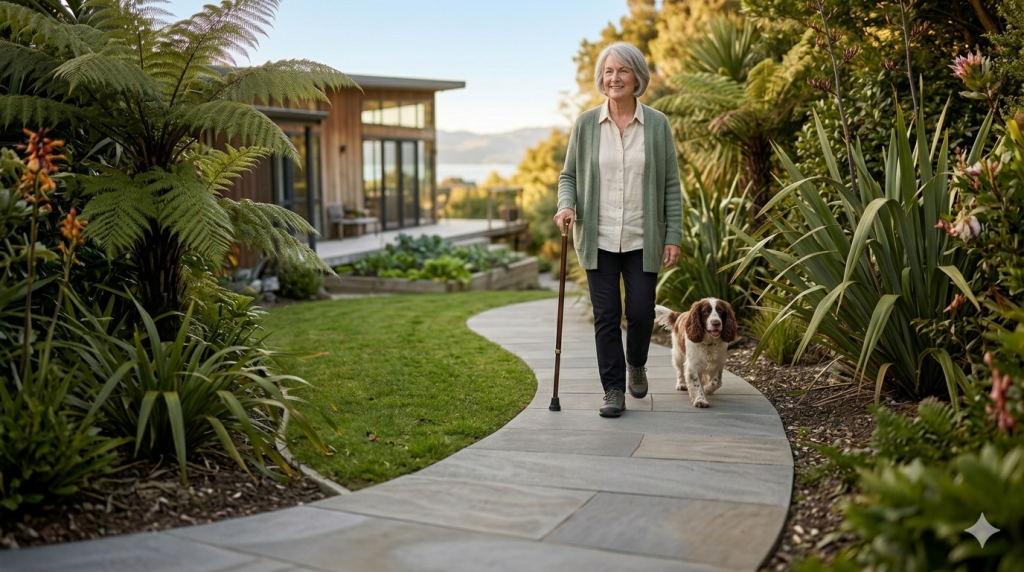
A walking stick is a simple mobility aid that gives light support through one hand. It can help seniors feel more confident, especially when walking short distances or moving through familiar places.
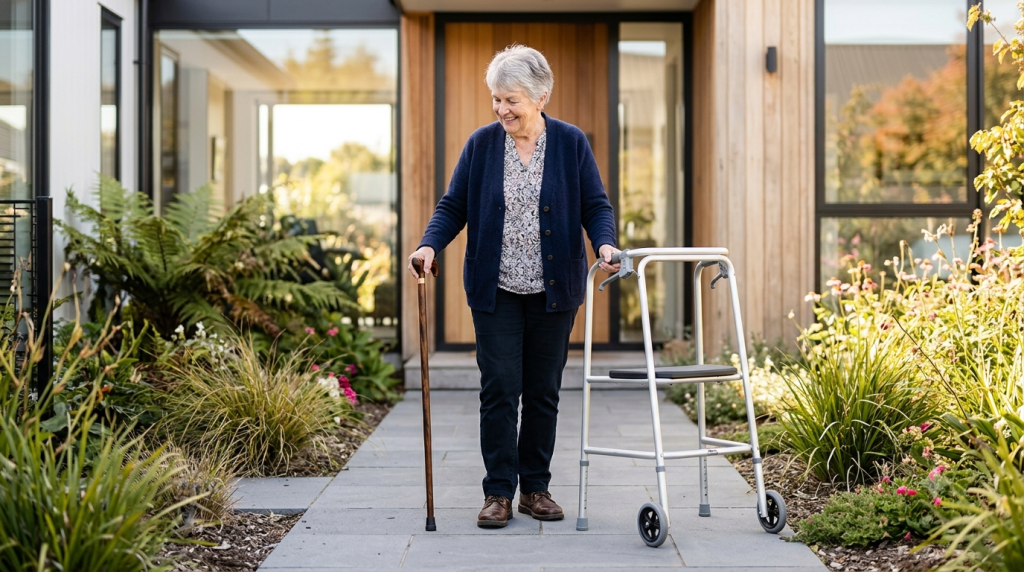
A walking frame provides support through both hands and usually gives more stability. Some frames have no wheels, while rollators have three or four wheels, hand brakes, and often a seat.
The simplest way to think about it is:
A walking stick helps with light balance.
A walking frame helps with stronger stability.
Neither option is automatically better. The better choice depends on the senior’s balance, strength, walking distance, home layout, and confidence.
When a Walking Stick May Be Better
A walking stick may be the better choice when the senior is mostly steady but wants extra confidence.
It can be useful for short walks, shopping centres, appointments, or moving around the home. It is light, portable, and easier to store than a walking frame.
Walking sticks may also feel less intimidating for seniors who do not want to use a larger mobility aid. For seniors who prefer a less clinical-looking mobility aid, our premium walking canes guide compares stylish wooden, metallic and folding options.
A Walking Stick May Suit Seniors Who:
- Need light balance support
- Walk fairly well most of the time
- Want something portable
- Need occasional support outside the home
- Can safely use one hand for support
- Do not need a seat for resting
- Do not need support on both sides
Be Careful If:
- The senior leans heavily on the cane
- Balance feels poor
- The senior has frequent falls
- The cane feels unstable
- Walking longer distances causes fatigue
- Support is needed on both sides
In these cases, a walking frame may be safer.
When a Walking Frame May Be Better
A walking frame may be better when a senior needs stronger support than a cane can provide.
It can help with balance, posture, confidence, and fatigue. A walking frame gives the user two-hand support and can feel more stable than a single walking stick.
Four-wheel rollators can also include a seat, basket, and hand brakes, which may be useful for outings.
A Walking Frame May Suit Seniors Who:
- Feel unsteady with a walking stick
- Need support on both sides
- Become tired when walking
- Need a seat for resting
- Walk longer distances outdoors
- Want more confidence around the home
- Need stronger support after illness, injury, or reduced mobility
Be Careful If:
- The senior cannot control hand brakes
- The frame is too wide for the home
- The walker is too heavy to lift or store
- The senior mainly needs light support only
- A non-wheeled frame would be safer than a rollator
The right walking frame should match the senior’s actual strength and environment.
Walking Stick vs Walking Frame for Indoor Use
For indoor use, the best choice depends on space and stability needs.
A walking stick is easy to use in tight spaces. It works well in small homes, narrow hallways, and rooms where a frame may feel bulky.
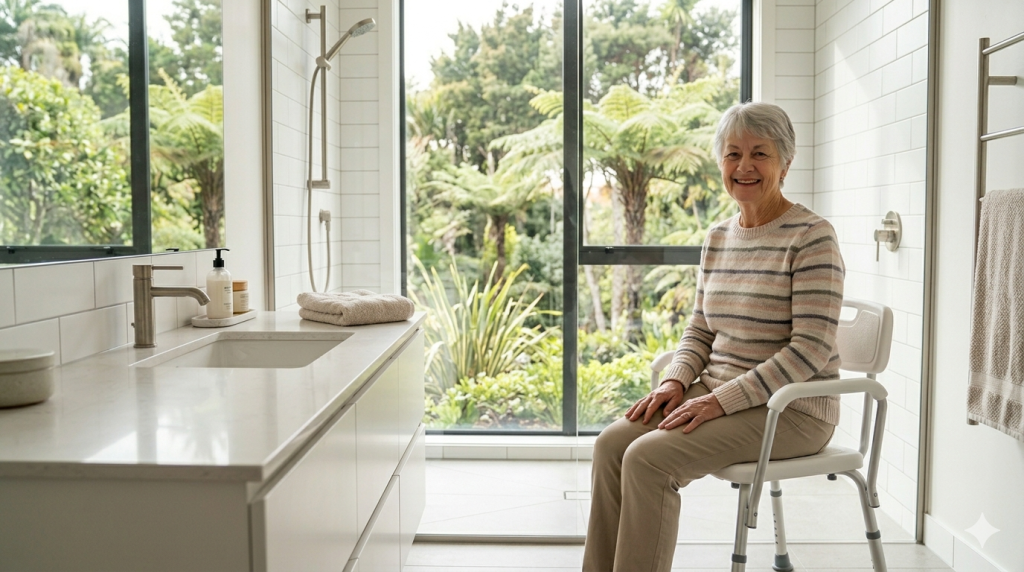
A walking frame may be better if the senior feels unsafe moving between rooms, getting to the bathroom, or walking after standing up.
Home layout matters. A large walker may not work well in narrow bathrooms or crowded bedrooms. A cane may be easier to manoeuvre, but it may not provide enough support.
Walking Stick vs Walking Frame for Outdoor Use
Outdoor use is different from indoor use.
A walking stick can help on smooth footpaths, short walks, and light outdoor movement. It is easy to carry and does not require much storage.
A walking frame or rollator may be better for longer outdoor walks, shopping trips, parks, and community outings. A rollator with a seat can help seniors rest when they get tired.
For gravel, grass, lifestyle blocks, or uneven driveways, an outdoor rollator or off-road walking frame may be more suitable than a standard indoor walker.
Walking Stick vs Rollator
A rollator is a walking frame with wheels. Most rollators have three or four wheels, hand brakes, and sometimes a seat or storage bag.
A walking stick is simpler and lighter.
A rollator gives more support and may be better for seniors who need help walking longer distances.
However, a rollator requires safe brake use. If the senior cannot squeeze, lock, or release the brakes confidently, professional advice may be needed.
For more detail on choosing between a seated rollator and a simpler frame, read our walking frame with seat vs standard frame comparison.
Which Option Is Safer?
The safer option is the one that matches the senior’s needs.
A walking stick can be safe for light support when used correctly and adjusted to the right height.
A walking frame can be safer when stronger support is needed.
Problems happen when the wrong product is used. A senior who needs a frame may be unsafe with only a cane. A senior who only needs light support may find a bulky frame unnecessary.
Safety depends on fit, correct use, environment, footwear, lighting, and whether the senior can control the aid properly.
Signs a Walking Stick May Not Be Enough
A walking stick may not provide enough support if the senior:
- Still feels unsteady
- Leans heavily on the cane
- Has falls or near-falls
- Needs furniture for extra support
- Becomes tired quickly
- Has trouble walking to the bathroom
- Avoids going out because of balance concerns
- Needs support on both sides
If these signs are present, it may be worth comparing walking frames or speaking with a healthcare professional.
Signs a Walking Frame May Be Too Much
A walking frame may be more than necessary if the senior:
- Only needs occasional light support
- Walks confidently with a cane
- Lives in a very narrow home
- Finds the walker hard to store
- Struggles to lift or fold it
- Does not need a seat or two-hand support
In these cases, a walking stick or folding cane may be more practical.
What to Consider Before Choosing
1. Balance
Balance is the biggest factor.
Light balance support may only need a cane. Poor balance may require a walking frame.
2. Strength
A senior must have enough strength to use the aid properly.
A cane requires one-hand control. A walking frame requires both hands and sometimes brake control.
3. Walking Distance
Short distances may suit a walking stick.
Longer walks may suit a rollator with a seat.
4. Home Layout
Narrow spaces can make large walkers difficult.
Measure hallways, bathrooms, bedrooms, and doorways before choosing a frame.
5. Outdoor Surfaces
Smooth footpaths are different from gravel, grass, or uneven driveways.
Outdoor rollators and off-road walking frames may be better for rougher ground.
6. Hand Comfort
Handle comfort matters for both canes and walking frames.
Seniors with arthritis or hand pain may need ergonomic grips or softer handles.
7. Brake Use
Rollators usually have brakes.
The senior must be able to use them safely before sitting, standing, turning, or stopping.
8. Storage and Transport
Walking sticks are easier to store.
Walking frames take more space and may need to fold for car transport.
Common Mistakes
Choosing Based Only on Appearance
A cane may look nicer, but it may not provide enough support.
A walker may look safer, but it may be too bulky.
The right choice depends on function.
Buying Without Checking Height
Both canes and walking frames need correct height.
Poor height can affect posture, comfort, and control.
Ignoring the Home Environment
A walking frame that does not fit through doorways will not be useful.
A cane may work indoors but feel unsafe outside.
Forgetting Footwear and Lighting
A walking aid is only part of safety.
Good footwear, clear pathways, and night lighting also matter.
Waiting Too Long to Upgrade
Some seniors continue using a cane even when they need stronger support.
If walking confidence is getting worse, reassessment may be needed.
Buying Checklist
Before choosing between a walking stick and walking frame, ask:
- Does the senior need light support or strong stability?
- Is support needed on one side or both sides?
- Does the senior get tired while walking?
- Is a seat needed for resting?
- Can the senior use hand brakes safely?
- Will it be used indoors, outdoors, or both?
- Does the home have narrow spaces?
- Does the walking aid fit the senior’s height?
- Is the handle comfortable?
- Is the rubber tip or wheel design suitable?
- Is professional advice needed?
This checklist can help families choose more confidently.
When to Seek Professional Advice
Professional advice may be useful if the senior:
- Has frequent falls
- Feels unsafe walking
- Has sudden mobility changes
- Is recovering from surgery or injury
- Leans heavily on a cane
- Cannot control a rollator safely
- Needs help choosing the correct height
- Is unsure whether a walking stick, walking frame, wheelchair, or mobility scooter is more suitable
- For a broader overview of walking support, wheelchairs, scooters and bathroom safety products, read our guide to mobility aids for seniors in NZ.
A physiotherapist, occupational therapist, doctor, nurse, or mobility equipment specialist can help match the walking aid to the person’s needs.
For information about aids and equipment support after an injury in New Zealand, visit ACC New Zealand.
FAQ
Is a walking stick or walking frame better for seniors?
A walking stick is better for light balance support. A walking frame is better when a senior needs stronger stability, two-hand support, or a seat for resting. The right choice depends on balance, strength, walking distance, and confidence.
When should a senior use a walking frame instead of a cane?
A senior may need a walking frame if they feel unsteady with a cane, lean heavily on it, tire quickly, or need support on both sides. A walking frame may also help for longer walks or daily movement around the home.
Are walking frames safer than walking sticks?
Walking frames can provide more support, but they are not automatically safer for everyone. They must fit the user and home properly. A walking stick may be safer for someone who only needs light support and can use it confidently.
What is the difference between a walking frame and a rollator?
A walking frame may have no wheels or two wheels. A rollator usually has three or four wheels, brakes, and often a seat. Rollators are easier to move forward but require safe brake control.
Can a senior use both a walking stick and a walking frame?
Yes. Some seniors use a walking stick for short, simple movements and a walking frame or rollator for longer walks or outings. The setup should be based on safety and professional advice when needed.
Final Recommendation
For seniors in New Zealand who only need light balance support, a walking stick may be the most practical first option. It is simple, portable, and easy to use for short distances.
For seniors who need stronger stability, support on both sides, or a seat for resting, a walking frame or rollator may be better. For rough outdoor ground, an off-road walking frame may be more suitable than a standard rollator.
The best choice is not based on age alone. It depends on balance, strength, walking distance, home layout, and confidence.
For a detailed product comparison, read our guide to walking frames for seniors in NZ.