Introduction
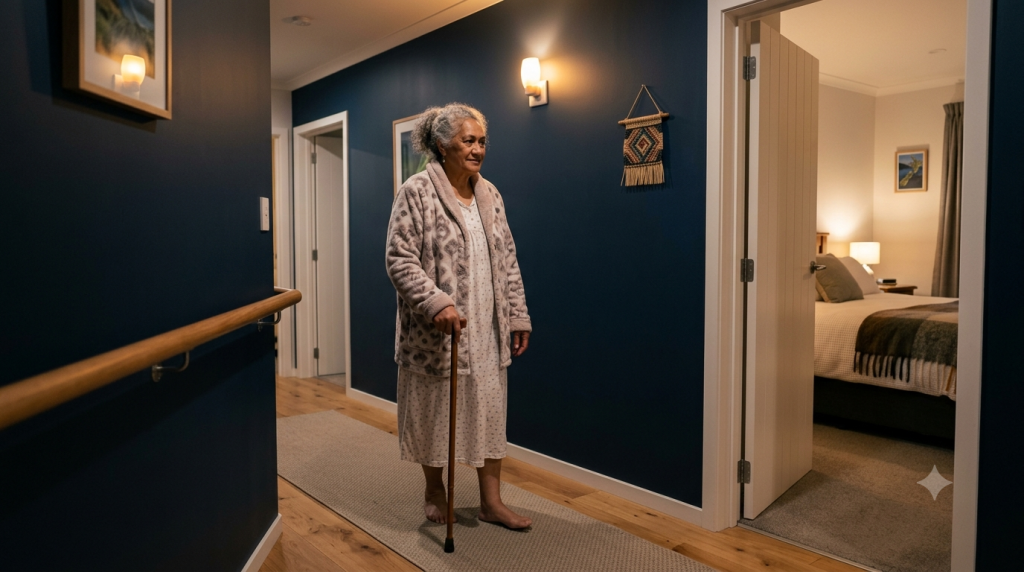
Night lights for seniors can make bedrooms, hallways, bathrooms, and stair areas safer to move through after dark. For many older adults, getting up at night to use the bathroom, drink water, check medication, or answer the phone can become risky if the room is too dark.
A good night light should provide enough visibility without being too bright or disturbing sleep. The best choice depends on where the light will be used, how sensitive the senior is to light, whether power points are available, and whether automatic motion sensing would be helpful.
This guide explains the most useful types of night lights for seniors in New Zealand, what features matter most, and how to choose the right option for different areas of the home.
Quick Picks: Best Night Light Types for Seniors
Best Overall: Motion Sensor Night Light
A motion sensor night light is often the most practical choice for seniors.
It turns on automatically when movement is detected, so the user does not need to find a switch in the dark. This can be helpful in bedrooms, hallways, and the path to the bathroom.
It is especially useful for seniors who wake during the night and want light only when needed.
Best for Hallways: Plug-In Night Light With Dusk-to-Dawn Sensor
For hallways, a plug-in night light with a dusk-to-dawn sensor can be a simple and reliable option.
It automatically turns on when the area becomes dark and turns off when there is enough light. This is useful for homes where the hallway should stay gently lit throughout the night.
Best for Bathrooms: Low-Glare Bathroom Night Light
A bathroom night light should provide enough visibility without being harsh.
A soft, low-glare light can help seniors find the toilet, sink, or doorway without switching on a bright ceiling light. This may make nighttime bathroom trips more comfortable.
Best for Bedrooms: Warm White Night Light
For bedrooms, warm white light is usually more comfortable than very bright white or blue-toned light.
A warm light can make the room easier to navigate without feeling too sharp or waking the user fully.
Best for Power Cuts or Flexible Use: Rechargeable Night Light
A rechargeable night light can be useful when power points are limited.
Some models can be moved between rooms or used temporarily near a bed, hallway, or bathroom. The key is to choose one with enough battery life and simple charging.
Who Should Consider Night Lights?
Night lights may be useful for seniors who:
- Get up during the night
- Walk to the bathroom after dark
- Feel unsure in dark hallways
- Have reduced vision in low light
- Want to avoid turning on harsh overhead lights
- Use walking aids at night
- Live in a home with steps, rugs, or narrow hallways
- Want a simple home safety improvement
Night lights are also helpful for family members setting up a safer home for an older parent or grandparent.
Who May Not Need One?
A night light may not be necessary if the senior:
- Rarely gets up at night
- Already has safe, low-level lighting
- Finds any light disruptive during sleep
- Has a bedroom layout with no obstacles
- Uses a bedside lamp that is easy to reach
However, even in homes that already feel safe, a small night light can be a low-cost way to reduce risk in key areas.
Night Lights for Seniors in NZ: What to Look For
1. Motion Sensor Function
Motion sensing is one of the most useful features.
It allows the light to turn on automatically when the senior moves nearby. This can reduce the need to search for switches or walk in darkness.
For hallways and bathrooms, motion sensors can be very practical.
2. Soft Warm Light
The light should be bright enough to see, but not so bright that it feels uncomfortable.
Warm white light is often better for bedrooms because it feels softer and less harsh than cool white light.
3. Low Glare
Glare can make visibility worse, especially for seniors with sensitive eyes.
Choose a night light that spreads light gently rather than shining directly into the eyes.
4. Reliable Power Source
Night lights may be plug-in, battery-powered, or rechargeable.
Plug-in lights are convenient for fixed locations. Rechargeable or battery-powered lights are useful where power points are not available.
5. Automatic On and Off
Automatic lights are easier for seniors to use.
Dusk-to-dawn sensors and motion sensors can reduce the need to remember switches.
6. Good Placement
The best night light is only useful if placed properly.
It should light the walking path, not just the wall. It should also avoid creating shadows that make obstacles harder to see.
7. Stable Design
For plug-in night lights, the design should sit securely in the power point.
For portable lights, the base should be stable enough that it does not fall easily.
8. Easy Controls
Controls should be simple.
Avoid models with tiny buttons, complicated modes, or confusing brightness settings if the senior prefers simple products.
9. Not Too Many Colours
Some night lights offer multiple colours.
This can be fun, but for seniors, simple warm light is usually more practical. Strong colours may not show obstacles clearly.
10. Easy Cleaning
Night lights collect dust like other home items.
A simple smooth design is easier to wipe clean.
Best Places to Put Night Lights
Bedroom Doorway
A night light near the bedroom doorway can help seniors see the exit path clearly.
This is useful if the bedroom is dark and the bathroom is outside the room.
Hallway
Hallways are one of the best places for night lights.
A soft light can help guide the way between the bedroom, bathroom, kitchen, or living area.
Bathroom
A bathroom night light can reduce the need to switch on bright overhead lights at night.
It can also help seniors see the toilet, sink, and doorway more clearly.
Near Stairs
If a home has stairs or steps, lighting becomes very important.
Night lights should not replace proper stair lighting, but they may help improve visibility in nearby areas.
Beside the Bed
A small bedside night light can help seniors find glasses, water, medication reminders, or a phone during the night.
It should not be so bright that it disturbs sleep.
Buying Checklist
Before choosing a night light, ask:
- Where will it be used?
- Does the senior need motion sensing?
- Should the light stay on all night?
- Is warm light better than cool light?
- Is there a nearby power point?
- Would rechargeable lighting be more flexible?
- Is the light too bright for sleeping?
- Does it create glare?
- Does it clearly light the walking path?
- Are the controls simple?
- Will it block other power plugs?
- Is it easy to clean and maintain?
This checklist helps match the light to the actual home setup.
Common Mistakes When Buying Night Lights
Choosing a Light That Is Too Bright
A very bright light may disturb sleep and feel uncomfortable at night.
Soft lighting is usually better for bedrooms and hallways.
Placing the Light Too Low or Too Far Away
A night light that does not illuminate the walking path may not help enough.
Placement is just as important as the product itself.
Ignoring Shadows
Poorly placed lights can create shadows.
Shadows may make rugs, furniture, or steps harder to see.
Buying Complicated Smart Lights Too Early
Smart lights can be useful, but they may be unnecessary if the senior only needs simple nighttime visibility.
For many seniors, a basic motion sensor or plug-in light is easier.
Forgetting Batteries or Charging
Battery lights are useful, but only if they are maintained.
If batteries run out often, a plug-in model may be more reliable.
Night Lights vs Bedside Lamps
A bedside lamp provides stronger light and is useful for reading, getting dressed, or doing tasks.
A night light provides low-level guidance light for moving safely after dark.
Most seniors do not need to choose only one. A bedside lamp and a hallway night light can work together.
Night Lights vs Smart Lights
Smart lights can be controlled by apps, timers, or voice assistants.
They can be useful for tech-confident seniors or family-managed homes. However, they may be more complicated than necessary for basic nighttime safety.
For simple use, motion sensor night lights are often more practical.
Safety Tips for Nighttime Movement
Night lights work best when combined with a safer home setup.
Helpful tips include:
- Keep the path from bed to bathroom clear
- Remove loose rugs where possible
- Keep walking aids within easy reach
- Use supportive slippers or non-slip footwear
- Keep cords away from walking paths
- Place glasses and phone in the same location each night
- Use proper lighting near stairs
- Avoid rushing when getting up at night
A night light is useful, but the whole pathway should be safe.
Final Recommendation
The best night lights for seniors in New Zealand should be soft, reliable, easy to use, and placed where they improve nighttime visibility.
For most seniors, a motion sensor night light is the best starting point because it turns on automatically and only provides light when needed. For hallways, a plug-in dusk-to-dawn light may be more practical. For bedrooms, warm low-glare lighting is usually the most comfortable.
The best night light is not the brightest one. It is the one that helps the senior move safely at night without disturbing sleep.
For seniors setting up a safer bedroom, our guide to bed rails may also be helpful.
For more information about preventing falls for older adults, visit ACC New Zealand.
For seniors who walk around the home at night, our guide to non-slip slippers may also be useful.