Introduction
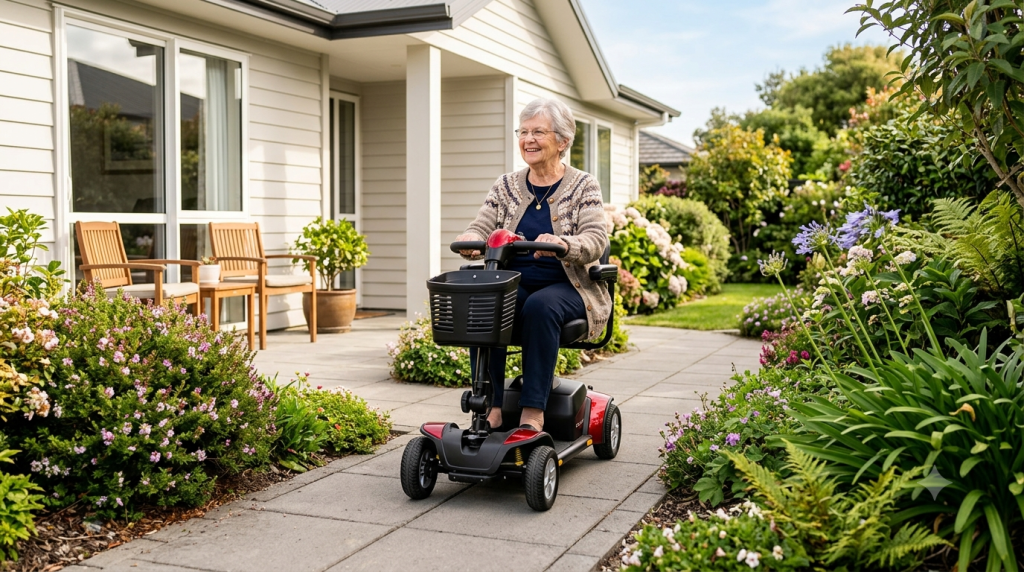
Mobility scooters for seniors in NZ can help older adults stay independent, travel longer distances, visit shops, attend appointments, and enjoy local community activities with more confidence. For seniors who can walk short distances but become tired or unsteady on longer outings, a mobility scooter may be a practical option.
The best mobility scooter is not simply the fastest or most expensive model. Seniors usually need the right size, turning radius, battery range, seat comfort, storage, transportability, stability, local service support, and safe control.
This guide compares practical mobility scooter options available through New Zealand mobility retailers. It also explains what to check before buying, who may benefit from a scooter, and when a walking frame, wheelchair, or professional advice may be more suitable.
Safety Note
A mobility scooter is a vehicle designed to help people with mobility impairment. Seniors should only use a scooter if they can steer, brake, judge distance, avoid hazards, and travel safely around pedestrians, footpaths, crossings, shops, and shared spaces.
Disclosure
This article may contain affiliate links in the future. If you buy through these links, Golden Vibe may earn a small commission at no extra cost to you. We only recommend products that are relevant to senior safety, comfort, mobility, and everyday living.
Quick Recommendations
| Product | Best For | Price Guide | Why It Works for Seniors | Where to Check |
|---|---|---|---|---|
| ATTO Classic Mobility Scooter | Best folding travel scooter | Around $6,395 | Stylish folding design, travel-friendly, up to 20km range, 120kg max user weight | Independent Living NZ |
| CTM HS-559 Mobility Scooter | Best everyday outdoor scooter | Around $5,500 | Up to 12 km/h, up to 50km range, front and rear suspension, larger outdoor design | Independent Living NZ |
| Heartway PF6KS+ Mobility Scooter | Best mid-range scooter to compare | Around $6,295 | Practical mobility scooter option for seniors comparing everyday use models | Independent Living NZ |
| Pride Mobility Outback Scooter | Best premium rugged option | Around $10,999 | Higher-cost outdoor mobility scooter for users needing stronger outdoor capability | Independent Living NZ |
| Pride Mobility Sportrider 3 Scooter | Best sport-style scooter | Around $9,495 when available | Sport-style design for users wanting a more powerful scooter feel | Independent Living NZ |
| Mobility Centre Mobility Scooters Range | Best range to compare, rent or service | Check current price | New, used, rental and service options for different sizes and environments | Mobility Centre NZ |
Best Folding Travel Scooter: ATTO Classic Mobility Scooter
The ATTO Classic Mobility Scooter is a premium folding scooter designed for seniors who want a compact and travel-friendly option. It is especially useful for people who need a scooter that can be stored more easily or transported in a car.
A folding scooter may suit seniors who still go out regularly but do not want a large full-size scooter. It can be useful for appointments, travel, shopping centres, and situations where storage space matters.
The trade-off is that folding scooters are not always the best option for rough outdoor surfaces, long-range outdoor trips, or users who need a larger seat and stronger suspension.
Good For
- Seniors who want a folding mobility scooter
- Travel and car transport
- Shopping centres and smoother surfaces
- Users who want compact storage
- People who value design and portability
Be Careful If
- The senior needs a rugged outdoor scooter
- Long outdoor range is the main priority
- A larger seat is needed
- The user needs stronger suspension
- Budget is limited
Best Everyday Outdoor Scooter: CTM HS-559 Mobility Scooter
The CTM HS-559 Mobility Scooter is a more traditional outdoor scooter option. It offers a higher speed and longer range than many small folding scooters, with front and rear suspension and a larger overall design.
This type of scooter may suit seniors who want to travel around the neighbourhood, visit local shops, or go longer distances than they can comfortably walk.
The larger design may provide more comfort outdoors, but it also means more storage space is needed. Families should check doorway access, garage space, turning radius, transport needs, and whether the senior can control a larger scooter safely.
Good For
- Seniors who need longer outdoor range
- Local errands and community outings
- Users who want suspension and a larger seat
- People who find small scooters too limited
Be Careful If
- The senior needs a scooter for tight indoor spaces
- Storage space is limited
- The scooter needs to fit into a small car
- The user has difficulty judging speed or distance
- Footpaths in the local area are narrow or uneven
Best Mid-Range Scooter to Compare: Heartway PF6KS+ Mobility Scooter
The Heartway PF6KS+ Mobility Scooter is another mobility scooter option for seniors comparing mid-range models. It may suit people who want a practical scooter without immediately choosing the highest-priced premium outdoor model.
This type of scooter should be compared carefully with other models based on range, seat comfort, scooter size, turning radius, maximum user weight, battery type, and local servicing support.
For seniors, the right scooter is rarely chosen by price alone. Comfort, safety, and day-to-day usability matter more.
Good For
- Seniors comparing everyday scooter options
- Users who want a practical mobility scooter
- Families looking beyond basic compact models
- People who want support from a mobility retailer
Be Careful If
- Detailed specifications are unclear
- The scooter cannot be tried before purchase
- The user needs a very compact travel scooter
- Outdoor range and terrain needs are demanding
Best Premium Rugged Option: Pride Mobility Outback Scooter
The Pride Mobility Outback Scooter is a higher-cost mobility scooter option that may suit seniors who need a stronger outdoor model. A premium rugged scooter may be useful for users who need more outdoor capability than a compact scooter can provide.
This type of scooter is usually not the first choice for someone who mainly uses smooth footpaths or indoor shopping centres. It makes more sense when the user needs a stronger, more outdoor-focused scooter and has enough space to store and operate it.
Because of the price, families should check whether the senior genuinely needs this level of scooter before buying.
Good For
- Seniors needing stronger outdoor capability
- Larger outdoor spaces
- Users who need a more substantial scooter
- Families prioritising ruggedness over compact size
Be Careful If
- The senior mainly uses smooth surfaces
- Storage space is limited
- Transport in a car is needed
- A smaller scooter would be easier to handle
- Budget is a major concern
Best Sport-Style Scooter: Pride Mobility Sportrider 3 Scooter
The Pride Mobility Sportrider 3 Scooter is a sport-style scooter that may appeal to users who want a more distinctive design and a stronger scooter feel.
This kind of scooter is not for every senior. It may suit confident users who want a larger, more powerful-looking scooter and have enough outdoor space for practical use.
For most seniors, safety, comfort, turning control, and service support should come before appearance. A sport-style scooter should still be assessed like any other mobility device.
Good For
- Confident scooter users
- Seniors who prefer sport-style design
- Outdoor use where space allows
- Users comparing premium scooter styles
Be Careful If
- The senior is new to mobility scooters
- The scooter feels too large or fast
- Local footpaths are narrow
- Storage or transport is difficult
- A simpler scooter would be safer
Best Range to Compare, Rent or Service: Mobility Centre Mobility Scooters
Mobility Centre’s mobility scooter range is useful for seniors and families who want to compare different models, sizes, rental options, and service support.
This is important because a mobility scooter is a major purchase. Trying a scooter, asking questions, and understanding maintenance can be just as important as comparing price.
A retailer that offers new, used, rental, hire, servicing, and repairs may be especially useful for seniors who are not sure whether they need a compact scooter, travel scooter, full-size scooter, or outdoor model.
Good For
- First-time scooter buyers
- Families comparing multiple models
- Seniors wanting rental or hire options
- People who need local service and repairs
- Users unsure which scooter size is suitable
Be Careful If
- A product is chosen without trying it
- The senior’s local environment is not considered
- Servicing and battery replacement costs are ignored
- The scooter is bought only because it looks impressive
Folding Scooter vs Full-Size Mobility Scooter
A folding scooter is usually better for storage, travel, and transport. It may suit seniors who use the scooter in shopping centres, appointments, airports, or smoother outdoor areas.
A full-size mobility scooter usually offers more comfort, range, seat support, and outdoor stability. It may suit seniors who use the scooter around the neighbourhood or on longer local outings.
The choice depends on whether portability or outdoor comfort matters more.
Mobility Scooter vs Walking Frame
A walking frame still requires the senior to walk. It provides balance support and may include a seat for resting.
For seniors who walk on rougher outdoor surfaces, an off road walking frame may also be worth comparing.
A mobility scooter provides powered seated mobility. It may suit seniors who can walk short distances but cannot comfortably walk far enough for daily errands or community outings.
If the senior wants to keep walking and only needs stability, a walking frame may be better. If walking longer distances is too tiring or unsafe, a mobility scooter may be more practical.
Mobility Scooter vs Wheelchair
A wheelchair may be pushed by another person or self-propelled by the user. It is useful for appointments, outings, and situations where walking is difficult.
A mobility scooter is powered and can support more independent travel, but it requires safe steering, braking, awareness, and judgement.
A scooter may give more independence outdoors, but it is not suitable for every senior. A wheelchair may be more practical when another person provides support or when space is limited.
Who Should Consider a Mobility Scooter?
A mobility scooter may be useful for seniors who:
- Can walk short distances but not long distances
- Become tired during shopping or appointments
- Want to stay active in the community
- Need help travelling around local areas
- Can safely steer and brake
- Understand footpath and pedestrian safety
- Have space to store and charge the scooter
- Prefer powered mobility over being pushed in a wheelchair
- For a broader comparison of scooters, wheelchairs, walking frames and other mobility products, read our guide to mobility aids for seniors in NZ.
- For a detailed buying guide, read our comparison of mobility scooters for seniors in NZ.
A scooter can support independence, but only when the user can operate it safely.
Who May Not Need One?
A mobility scooter may not be necessary if the senior:
- Only needs light balance support
- Can manage well with a walking stick
- Would benefit more from a walking frame
- Needs indoor support in a small home
- Cannot safely control speed or direction
- Has poor vision, judgement, or awareness
- Has no safe place to store or charge it
- Needs caregiver-supported transport instead
In some cases, a walking frame, wheelchair, taxi service, community transport, or home delivery support may be more suitable.
What to Look For When Buying Mobility Scooters for Seniors
1. Scooter Type
The first decision is whether the senior needs a folding scooter, compact travel scooter, mid-size scooter, full-size outdoor scooter, or heavy-duty model.
Choosing the wrong scooter type can make the product frustrating or unsafe.
2. Battery Range
Battery range should match real use.
A senior who only uses the scooter in a shopping centre may not need a long range. Someone using it around the neighbourhood may need more.
3. Seat Comfort
Seat comfort matters, especially for longer trips.
Look at seat width, back support, armrests, swivel function, and whether the seat position feels natural.
4. Maximum User Weight
Always check the maximum user weight.
The scooter should comfortably support the user and still perform safely.
5. Turning Radius
A small turning radius is useful for tight spaces.
This matters in shops, hallways, retirement villages, and narrow paths.
6. Ground Clearance
Ground clearance matters outdoors.
Low scooters may struggle with uneven surfaces, kerbs, or rough paths.
7. Suspension
Suspension can make outdoor rides more comfortable.
It may be important for seniors who travel over uneven footpaths or longer distances.
8. Controls
The controls should be easy to understand.
The senior should be able to accelerate, brake, turn, and stop calmly and safely.
9. Storage and Charging
A scooter needs a safe place to store and charge.
Check garage space, covered storage, power point access, and whether the scooter must fit through doorways. When a raised doorway or entrance step blocks access, compare our wheelchair and mobility scooter ramp guide before purchasing a portable ramp.
10. Service and Repairs
Mobility scooters need maintenance.
Battery replacement, tyres, brakes, servicing, and repairs should be considered before buying.
Buying Checklist
Before choosing a mobility scooter, ask:
- Will it be used indoors, outdoors, or both?
- Is portability or range more important?
- Does it need to fold or fit in a car?
- Is the seat comfortable?
- Can the senior use the controls safely?
- Is the maximum user weight suitable?
- Does the scooter fit local footpaths?
- Is the turning radius suitable?
- Is storage and charging available?
- Are repairs and servicing available locally?
- Would hiring or renting first be better?
- Is professional advice needed before buying?
This checklist helps avoid buying an expensive scooter that does not match the senior’s daily routine.
Common Mistakes When Buying Mobility Scooters
Buying Too Large
A large scooter may look comfortable, but it can be difficult to store, turn, transport, or use in crowded areas.
Size should match the user and environment.
Buying Too Small
A compact scooter may be easy to store, but it may not have enough comfort, range, or outdoor stability.
Small scooters are not always best for daily outdoor use.
Ignoring Battery Range
Battery range matters if the senior uses the scooter for errands, appointments, or neighbourhood travel.
Always compare advertised range with realistic use.
Forgetting Maintenance
Mobility scooters need service, tyres, batteries, and repairs.
Local support matters.
Not Trying Before Buying
A scooter may look suitable online but feel uncomfortable in real life.
If possible, trying before buying or hiring first is a safer approach.
Safety Tips for Mobility Scooter Use
Helpful safety tips include:
- Start slowly in safe areas
- Practise turning, stopping, and reversing
- Use footpaths where appropriate
- Be careful around pedestrians
- Slow down near shops, crossings, and driveways
- Avoid steep slopes if control is difficult
- Keep both hands on the controls
- Charge the battery regularly
- Keep the scooter visible with lights, reflectors, or a flag if needed
- Ask for advice if the scooter feels too fast or hard to control
A mobility scooter should support independence, but safety comes first.
For official New Zealand information about mobility scooter rules, visit Waka Kotahi NZ Transport Agency.
When to Seek Professional Advice
Professional advice may be useful if the senior:
- Has frequent falls
- Has poor balance or vision
- Cannot walk longer distances
- Is unsure whether to choose a scooter, walking frame, or wheelchair
- Needs funding or equipment support
- Is recovering from injury or surgery
- Has difficulty judging speed or distance
- Needs help choosing a safe model
A physiotherapist, occupational therapist, doctor, nurse, mobility retailer, or ACC-related provider may help identify the right mobility solution.
FAQ
What is the best mobility scooter for seniors in NZ?
The best mobility scooter depends on the senior’s walking ability, local environment, storage space, budget, and transport needs. Folding scooters may suit travel and storage, while larger scooters may suit longer outdoor trips.
Are mobility scooters legal in New Zealand?
Mobility scooters are recognised as mobility devices under New Zealand transport rules. Users should follow footpath and road safety rules and operate them carefully around pedestrians and shared spaces.
Do seniors need a licence for a mobility scooter in NZ?
A standard mobility scooter used as a mobility device does not usually require a driver licence like a car. However, users still need to operate it safely and follow the relevant rules.
Is a mobility scooter better than a walking frame?
A mobility scooter is better when walking longer distances is too tiring or unsafe. A walking frame is better when the senior still wants to walk and mainly needs balance support.
Should I buy or rent a mobility scooter first?
Renting or hiring can be useful before buying because it lets the senior test whether a scooter suits their body, local environment, storage space, and confidence level.
Final Recommendation
For seniors in New Zealand who can walk short distances but struggle with longer outings, a mobility scooter can be a practical way to support independence.
The ATTO Classic may suit seniors who want a folding travel scooter. The CTM HS-559 may suit users who need a more traditional outdoor scooter with longer range. Larger premium scooters such as the Pride Outback may suit users with stronger outdoor needs, while Mobility Centre is useful for comparing rental, service, and multiple scooter types.
The best mobility scooter is not simply the fastest or most expensive model. It is the one the senior can control safely, store properly, charge easily, and use confidently in real daily life.
For seniors who still want to keep walking with support, our guide to walking frames for seniors in NZ may also be helpful.