Introduction
Best digital thermometers for seniors in New Zealand can make home health monitoring easier, faster, and more comfortable. For older adults, checking body temperature at home can be useful when feeling unwell, recovering from illness, or monitoring general health changes.
A good digital thermometer should be simple to use, easy to read, and comfortable for regular home use. Seniors and family members should be able to get a clear reading without confusion.
In this guide, we look at the most important features to consider when choosing a digital thermometer for seniors.
Why Digital Thermometers Are Helpful for Seniors
Temperature checks are one of the most common ways to monitor illness at home. For seniors, having a reliable thermometer can provide useful information when deciding whether symptoms need closer attention.
A digital thermometer may help seniors:
- Check temperature quickly at home
- Monitor fever symptoms
- Track changes during illness
- Share useful information with family or healthcare providers
- Reduce guesswork when feeling unwell
- Support basic home health routines
For many households, a digital thermometer is a simple but important health tool.
Best Digital Thermometers for Seniors in New Zealand: Key Features
Easy-to-Read Display
The display should be large, clear, and easy to understand.
Seniors with reduced vision may find small numbers difficult to read. A thermometer with a bright screen or large digital numbers can be much easier to use.
Fast Reading Time
A good thermometer should provide results quickly.
Long waiting times can be uncomfortable, especially for seniors who feel weak, tired, or unwell. Fast readings can make the process easier.
Simple One-Button Operation
The thermometer should be easy to operate.
A simple one-button design is often better than a model with complicated settings. Seniors should not need to navigate confusing menus just to check temperature.
Comfortable Use
Different thermometers are used in different ways, including oral, ear, forehead, or underarm measurement.
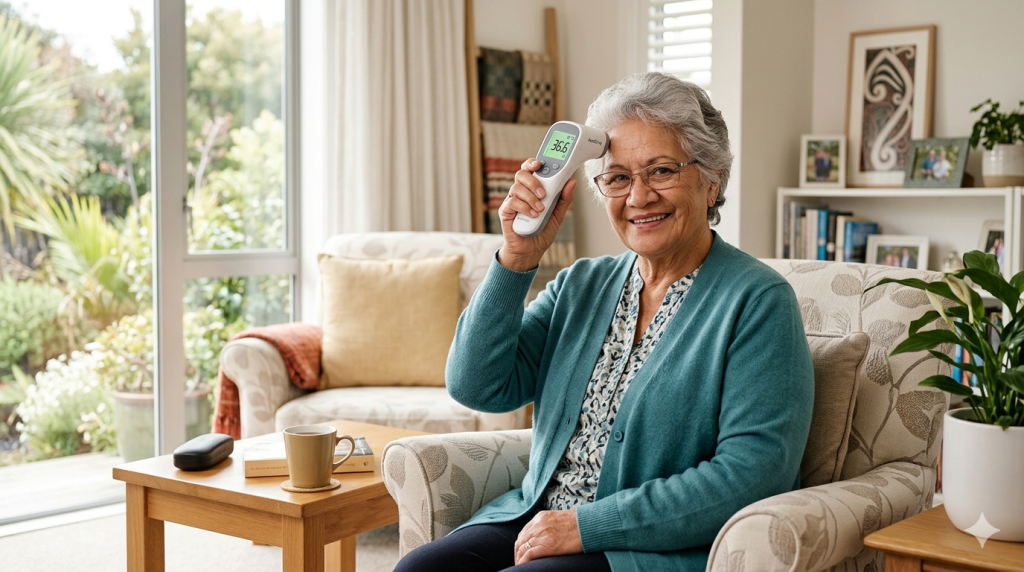
The best option depends on comfort, mobility, and ease of use. Some seniors may prefer a non-contact forehead thermometer because it feels quick and simple.
Clear Fever Indicator
Some digital thermometers include colour indicators or warning sounds.
These can help users understand whether a reading may be high. However, seniors should still follow medical advice if they are concerned about symptoms.
Types of Digital Thermometers
Oral Digital Thermometers
Oral thermometers are common, affordable, and familiar.
They can be useful for regular home use, but they require the user to hold the thermometer properly for an accurate reading.
Forehead Thermometers
Forehead thermometers are quick and easy to use.
Some models are contactless, which can be more comfortable when checking temperature frequently.
Ear Thermometers
Ear thermometers can provide fast readings.
They may be useful for some households, but they need to be placed correctly to get reliable results.
Large Display Thermometers
Large display thermometers are especially helpful for seniors with reduced vision.
They make results easier to read without needing to squint or use reading glasses.
Common Mistakes When Buying a Digital Thermometer
When choosing a thermometer, avoid these common mistakes:
- Buying a model with a display that is too small
- Choosing a thermometer with complicated settings
- Ignoring battery requirements
- Buying a model that is uncomfortable to use
- Not reading the instructions before first use
- Assuming all thermometer types are used the same way
The best thermometer should be simple, readable, and suitable for the person using it.
Who Should Consider a Digital Thermometer?
A digital thermometer may be useful for seniors who:
- Want to monitor illness symptoms at home
- Live independently
- Have family members helping with care
- Prefer simple health tools
- Want quick and easy temperature checks
- Need a basic home health monitoring device
It is also useful for families who want to keep essential health tools available at home.
Home Health Monitoring Tips for Seniors
A thermometer works best as part of a simple health routine.
Helpful tips include:
- Keep the thermometer in an easy-to-find place
- Check batteries regularly
- Clean the thermometer according to instructions
- Write down readings if symptoms continue
- Follow the user manual for the correct method
- Contact a healthcare professional if symptoms are concerning
A thermometer can provide helpful information, but it should not replace professional medical advice.
Digital Thermometers vs Traditional Thermometers
Digital thermometers are generally easier to read than older-style thermometers. They usually show results on a screen and often provide faster readings.
Traditional thermometers may be harder to read and less convenient for some seniors. For most households, a simple digital thermometer is the more practical option.
Final Recommendation
The best digital thermometers for seniors in New Zealand should be easy to read, fast, comfortable, and simple to operate.
For most seniors, a thermometer with a large display, clear results, and simple controls is a practical choice. Forehead models may be especially convenient for quick checks, while oral digital thermometers can be affordable and familiar.
A good digital thermometer can make home health monitoring easier and give seniors and families more confidence when managing everyday illness symptoms.
For seniors who monitor their health at home, our guide to blood pressure monitors may also be helpful.
For general health information and advice in New Zealand, visit Healthify New Zealand.
For seniors building a simple home health kit, our guide to pulse oximeters may also be helpful.
For seniors who also need a simple way to track body weight at home, our guide to bathroom scales for seniors in NZ may be useful.